

2025-06-03T10:00:58
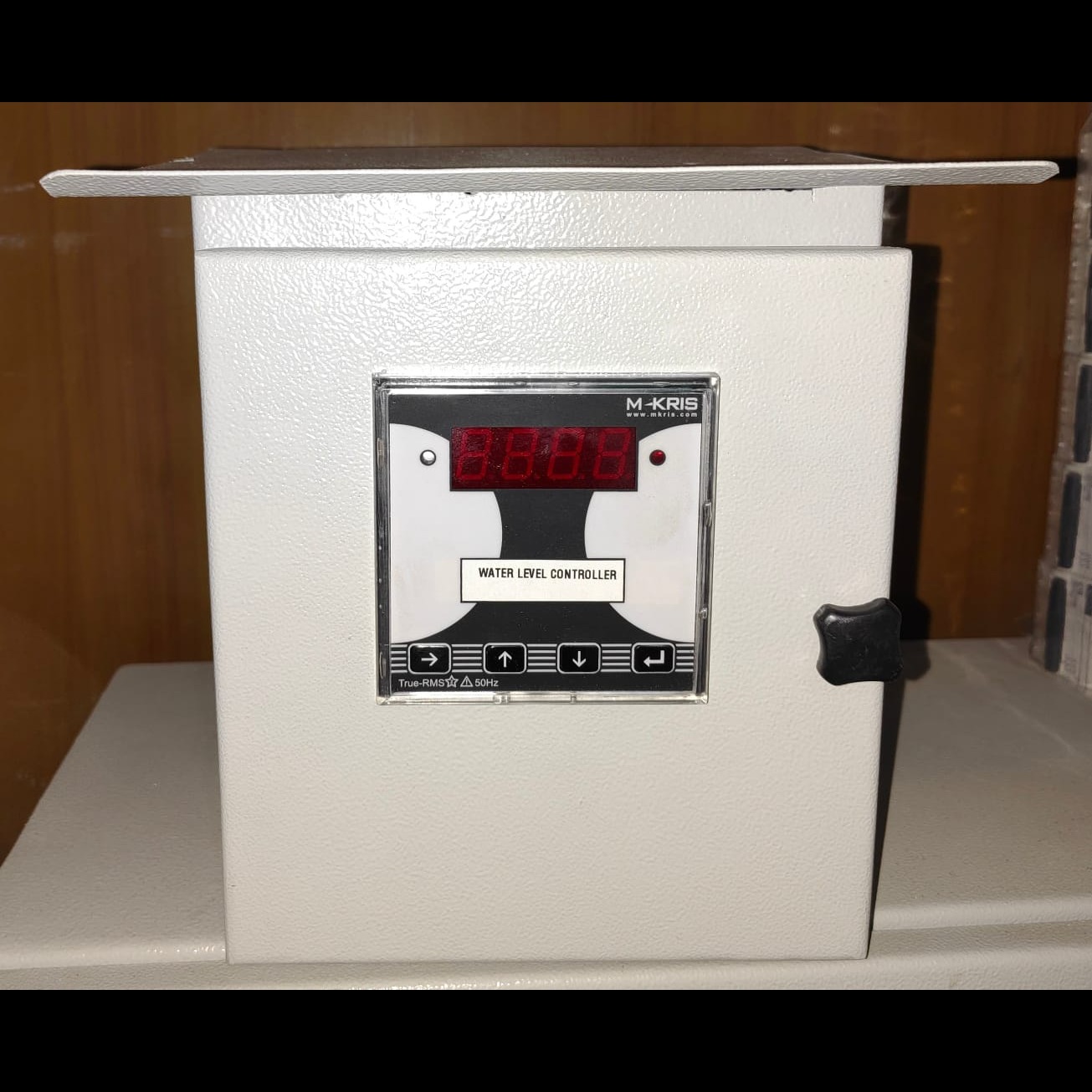
A three-level liquid level controller is a control system used to maintain the liquid level within a tank or vessel by monitoring and controlling three distinct levels: Low Level (LL) – Indicates that the liquid has fallen below a minimum safe point. At this level, the controller may trigger a pump to start filling the tank. Middle Level (ML) – Serves as a reference or control level. When the liquid reaches this level, the system maintains or adjusts the filling/draining rate. High Level (HL) – Indicates the tank is nearly full. At this point, the controller stops the pump or closes the valve to prevent overflow. Working Principle: The controller uses sensors (like float switches or capacitive sensors) to detect the liquid levels. Based on the sensor inputs, it operates pumps or valves through relays or PLC logic. It ensures safety, efficiency, and automation in liquid handling processes. Applications: Water tanks, industrial chemical tanks, boilers, and process industries.
Have a question? Ask here!
Required fields are marked *